













Last updated: Thursday, June 25, 2026
Choosing the right eyewear is more than just a matter of picking a stylish frame. It is about selecting the technology that helps you interact with the world clearly. It also helps you interact safely. Among the various types of prescription eyewear, single vision lenses are the most widely used. They are also the most versatile. You might be a dedicated professional in a high-risk industrial environment.
Understanding the nuances of these lenses is essential. It is vital for your long-term eye health. The world of optics is vast. At its heart lies a fundamental technology. This tech has helped billions of people see clearly. That technology is single vision lenses. The optical industry has seen the rise of complex designs. These include multifocal and digital designs.
However, the single vision lens remains the bedrock of vision correction. You might be a student or a professional athlete; these lenses are likely your primary window to the world. In this comprehensive guide, we will explore the details of single vision technology. Besides, we will look at how they function in different environments. We will see how specialized provider Eyeweb is changing things.
What are Single Vision Lenses?
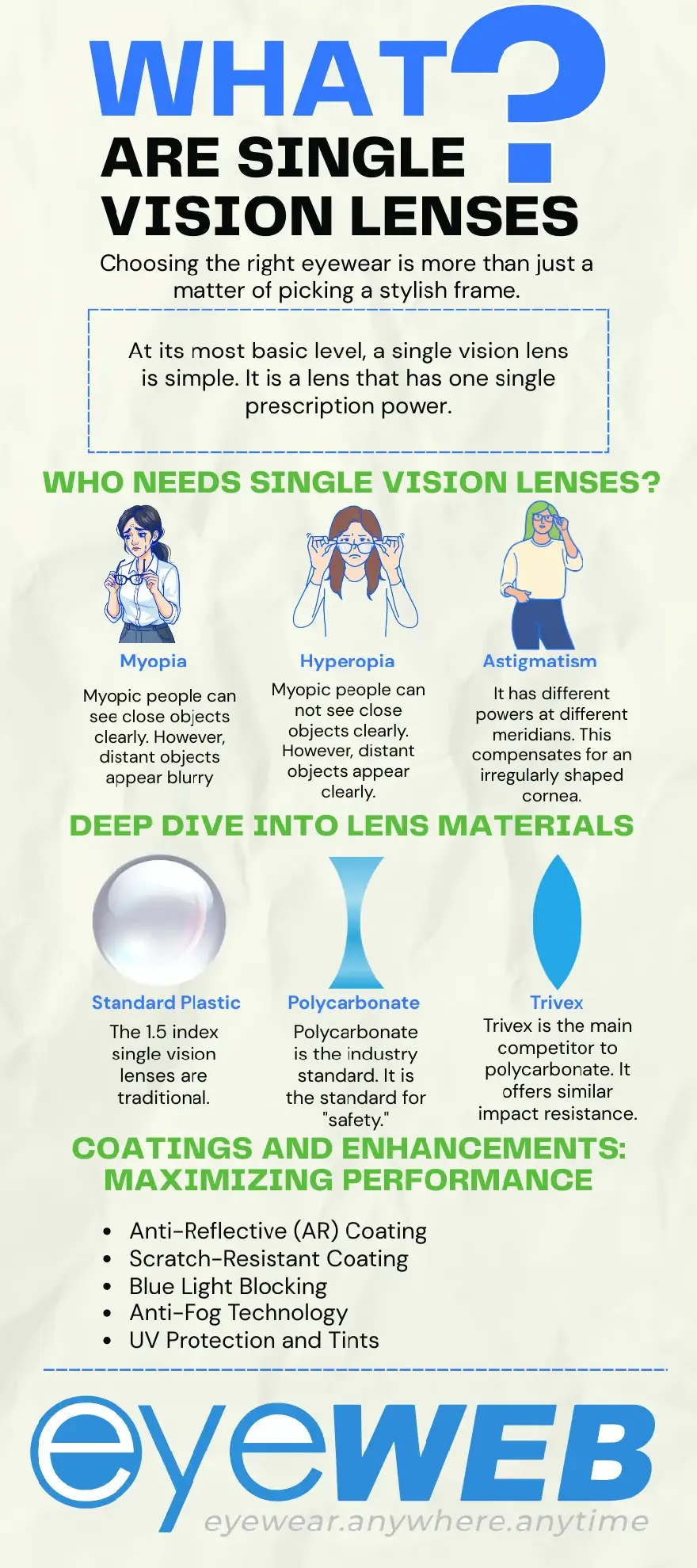
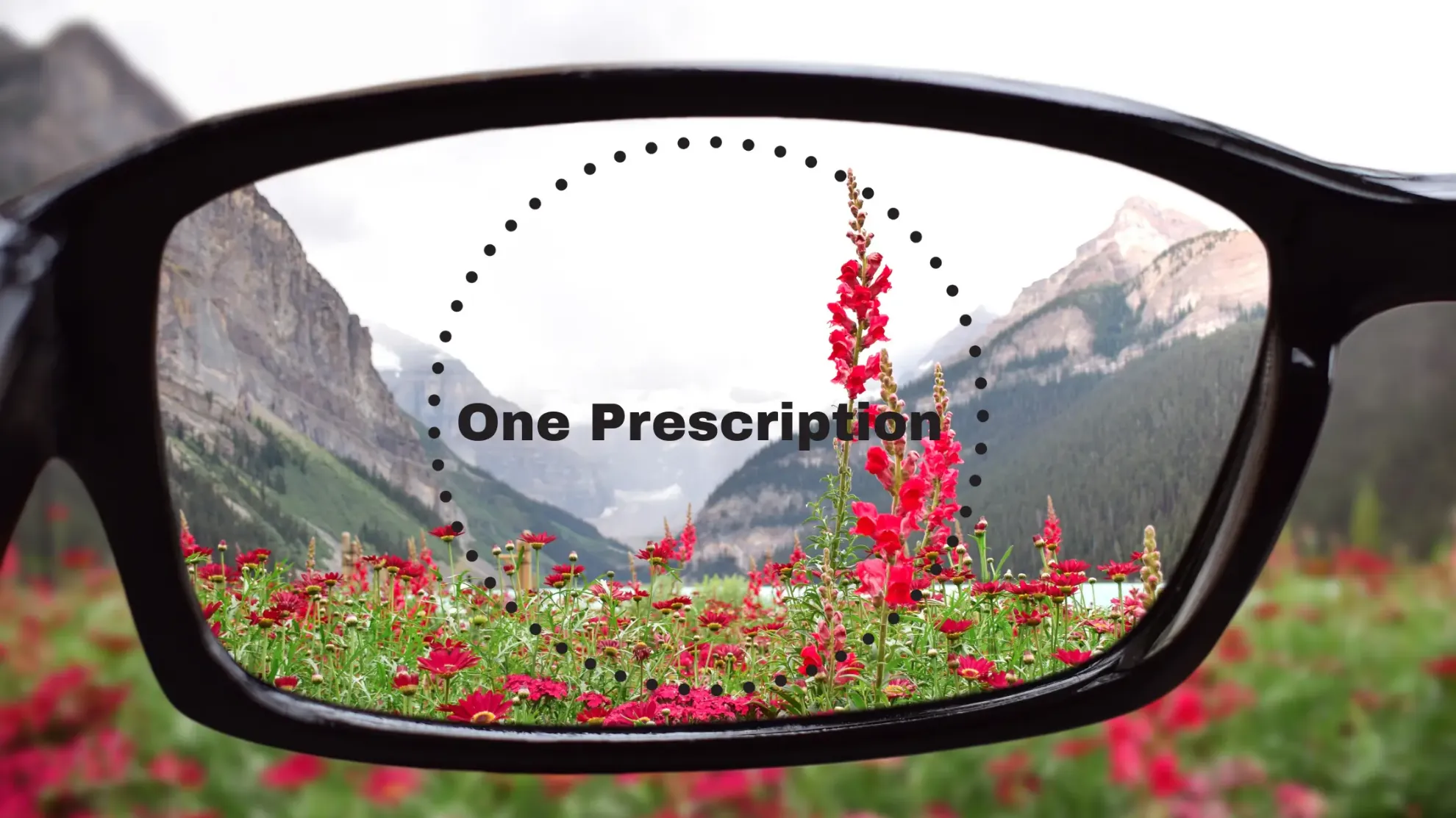
At its most basic level, a single vision lens is simple. It is a lens that has one single prescription power. This power covers the entire viewing surface. This distinguishes it from bifocals. Bifocals have two distinct powers. It also differs from progressive lenses. Progressives have a gradient of powers.
Mechanics of Focus
One must understand how the eye focuses. This helps you understand "what are single vision lenses." In a "perfect" eye, light enters through the cornea and lens. It is focused directly on the retina. However, this is not true for most of us. The shape of the eye might be off. The curvature of the cornea might be the cause. This causes light to fall in front of the retina. It may also fall behind the retina. Single vision eyeglasses use a specific curvature. This can be concave or convex. This shape shifts that focal point.
- Diverging Lenses (Concave): These are used for nearsightedness. These lenses spread light out. They do this before light hits the eye.
- Converging Lenses (Convex): These are used for farsightedness. These lenses bring light together more quickly.
The power of the lens is uniform. Because of this, single vision lenses offer a "distortion-free" experience. There is no "image jump." You see this jump in bifocals. There is no peripheral "blur." You often see this blur in progressive lenses. This makes them the gold standard for many activities. They are best for tasks requiring a wide field of view. They provide a stable field of view.
Who Needs Single Vision Lenses?
It is a common misconception about these lenses. Some think they are only for young people. In reality, people of all ages use them. They utilize single vision technology for many needs. These are often "task-specific" needs.

Vision Issues: Single Vision Glasses Can Correct
These lenses are very versatile. This allows them to address many refractive errors.
Nearsightedness (Myopia)
This is the most common reason for these lenses. It is for single-vision distance lenses. Myopic people can see close objects clearly. However, distant objects appear blurry. Indoor activities increasingly dominate the world. Screen time is also rising. Myopia rates are soaring. This makes distance-corrected lenses more essential than ever.
Farsightedness (Hyperopia)
This is often confused with presbyopia. Hyperopia is a condition where the eye is too short. It can also mean the cornea is too flat. This makes it hard to focus on objects up close. This often leads to headaches and eye strain during reading. It happens during computer work, too.
Astigmatism
We hear one frequent question. "Do single vision lenses correct astigmatism?" Yes, they do. Single vision lenses for astigmatism have a "toric" shape. A standard lens is spherical, like a basketball. An astigmatism lens is different because it's shaped more like a football. It has different powers at different meridians. This compensates for an irregularly shaped cornea.
Presbyopia (Task-Specific Use)
Presbyopia is age-related, and it is the loss of near focus. It is usually treated with progressives. However, many users prefer a dedicated pair. They want "reading glasses", and they are single vision lenses. They are calibrated for a 14–16 inch distance and provide a massive zone for reading. This zone is uninterrupted, and multifocals cannot match this.
Single Vision Lenses for Distance vs. Near Vision
The beauty of this technology is specialization. The lens is dedicated to one focal length. Because of this, the visual acuity is superior. It is better than any multifocal lens at that distance.
Distance Single Vision Lenses
These are the most common lenses. They are used for driving and watching movies. These lenses are used for playing sports because they allow the wearer to see the "big picture." They provide total peripheral clarity. Distance single vision lenses are the choice for athletes. They are best for outdoor workers as they don't have the "swim" effect. That effect can interfere with depth perception. It can interfere with balance.
Near Vision (Reading and Hobbies)
Some people spend their day reading blueprints. Some spend it sewing. Some do fine mechanical work. For them, a near-vision lens is a lifesaver. You do not have to move your head with these. You do not have to find a "sweet spot" like in progressives. A single vision reading lens is different because it allows you to move your eyes across the page. You can do this without losing focus.
The Intermediate Middle Ground
The digital age is here. With it, a third category has emerged. This is the intermediate lens. It is calibrated for specific distances. These are between 20 and 40 inches. This is the perfect range for a computer monitor.
Single Vision Lenses vs. Multifocals (Progressives & Bifocals)
You must choose between lens types. Choosing single vision vs. progressive lenses depends on lifestyle. It depends on the complexity of your tasks.
Single Vision v/s Progressive Lenses
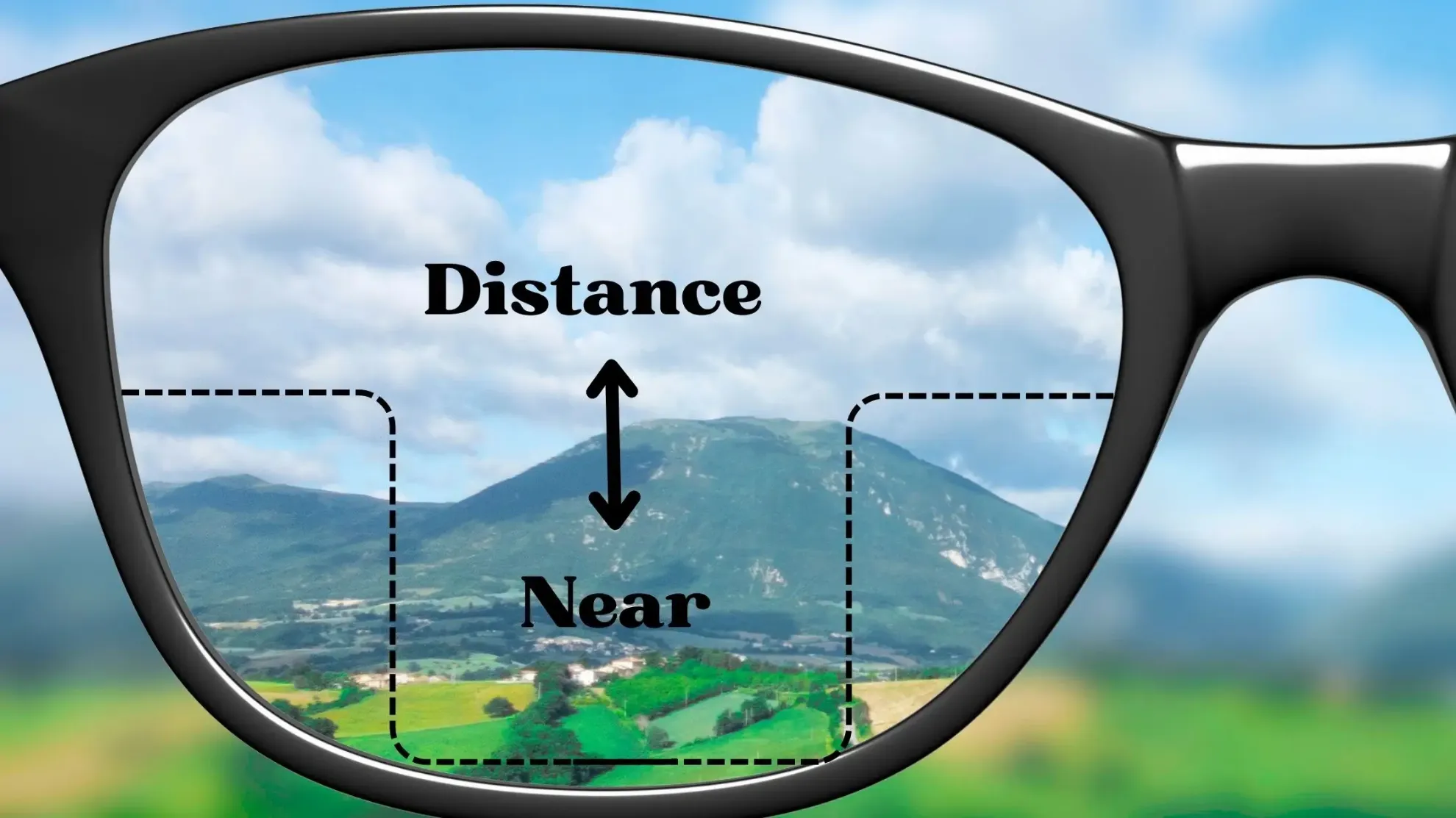
Progressive lenses are "no-line" multifocals. They provide a range of vision. This range goes from near to far. They are convenient; they have limitations.
- Peripheral Distortion: The sides of a progressive lens are unusable. This is due to the "corridor" design. Single vision lenses are different. They have no such distortion.
- Adaptation: Some people never adapt to progressives. They dislike the "swaying" sensation. Single vision lenses are easier, with zero adaptation time.
- Cost: Single vision lenses are more affordable. They are often called "cheap single-vision lenses." This is compared to premium progressives. Progressives require high-tech digital surfacing.
Single Vison v/s Bifocals
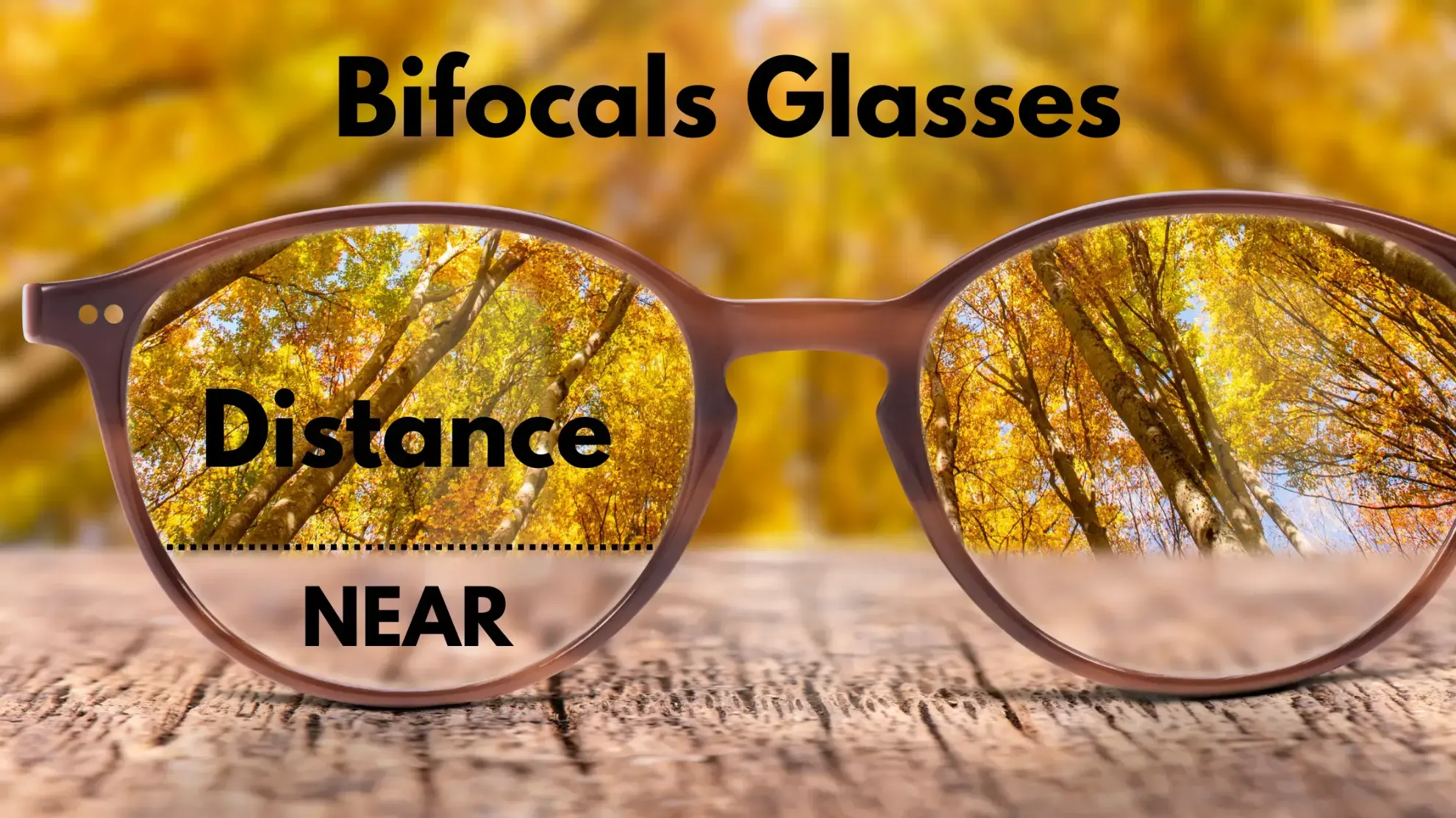
Bifocals have a visible line. They offer two distinct powers. However, many users find the "jump" distracting. This happens when moving eyes from top to bottom. For specialized work, single vision is often safer. It is more effective and applies to overhead mechanical repairs. It provides a consistent power. This power stays the same regardless of where you look.
Deep Dive into Lens Materials
You must choose a material for your lenses. This choice determines the weight and thickness. It determines the safety of your eyewear. At Eyeweb, we offer many materials. We ensure your glasses are optimized for your prescription.
Standard Plastic (CR-39)
The 1.5 index single vision lenses are traditional. They offer excellent optical clarity and are very affordable. However, they are thicker than modern choices. They are also heavier and are not recommended for safety. They are not for rimless frames. Single-vision uncoated plastic lenses have a weakness. They are highly susceptible to scratches.
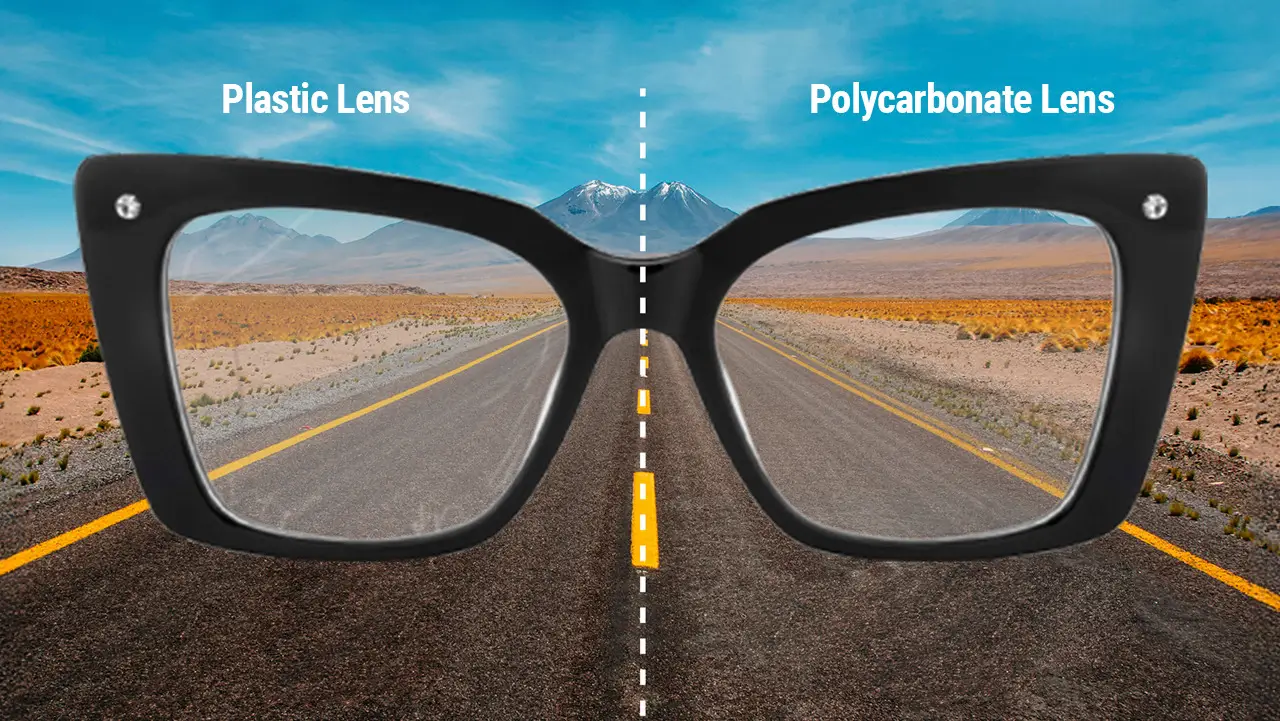
Polycarbonate Single Vision Lenses (Index 1.59)
Polycarbonate is the industry standard. It is the standard for "safety." It is very strong and up to 10 times more impact-resistant than plastic. It is stronger than glass, too.
- 1.59 polycarbonate single vision: This material is lightweight. It has built-in UV protection.
- When to use it: It is the mandatory choice for children and athletes. It is for anyone needing single vision lenses for industrial safety.
Trivex Lenses
Trivex is the main competitor to polycarbonate. It offers similar impact resistance. However, it has even better optical clarity. This is known as the Abbe value. It is the lightest material on the market and is highly resistant to chemicals. This makes it a favorite for lab workers.
High-Index Lenses (1.61, 1.67, 1.74)
Some people have high prescriptions. These may be -6.00 or higher. For them, standard lenses become very thick.
- Single vision high-index 1.67 lenses: These lenses are thinner. They are also flatter than 1.5 index lenses. They reduce the "magnified" look of the eyes. This helps farsighted users because reduce the "minimized" look. This helps nearsighted users. This results in a better appearance.
- 1.57 mid-index single vision vs. polycarbonate: 1.57 is thinner than plastic. However, it is not as strong. It doesn't offer the impact resistance of polycarbonate.
Coatings and Enhancements: Maximizing Performance
A lens is only the foundation to optimize your vision. Specialized coatings are essential.
Anti-Reflective (AR) Coating
AR coating is an important add-on. It is great for single vision lenses for driving because it eliminates reflections. These reflections come from oncoming headlights and street lamps. This improves contrast. It improves safety during night driving.
Scratch-Resistant Coating
Think about industrial settings where dust and debris are everywhere. They are a lens's worst enemy. A premium scratch-resistant coating is vital for work glasses. It ensures they last longer than a few months.
Blue Light Blocking
You might spend hours on a computer. If so, blue light-blocking lenses help. High-energy visible light is filtered out. This can improve your sleep-wake cycle and lessen the strain of digital eye.
Anti-Fog Technology
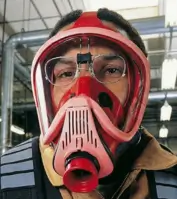
Some people wear lenses for industrial safety. For them, fogging is more than an annoyance. It’s a safety hazard, and anti-fog coatings prevent moisture beads. They ensure a clear vision when moving between temperatures. It helps when wearing a face mask.
UV Protection and Tints
Clear single vision lenses should have UV protection. However, outdoor workers may require more.
- Single Vision Transition (Photochromic) Lenses: These lenses darken in sunlight. They react to UV light. They are a popular choice. They are for people moving between indoors and outdoors.
- Single Vision Transition Lenses Price: These are more expensive than clear lenses. However, they save money because they act as both a primary pair and sunglasses.
- Gray vs. Brown Tints: Gray tints provide true colors. Brown tints enhance contrast. This is excellent for driving. It is good for construction work in bright sunlight.
Tailoring Lenses to Your Life
Single Vision Lenses for Computer Work
The distance to a computer screen is unique. It's closer than the road but is farther than a book. Standard reading glasses might be too strong, and distance glasses might be too weak. Single vision computer lenses are different. They are prescribed for this "intermediate" zone and are the perfect solution. They prevent "Computer Vision Syndrome."
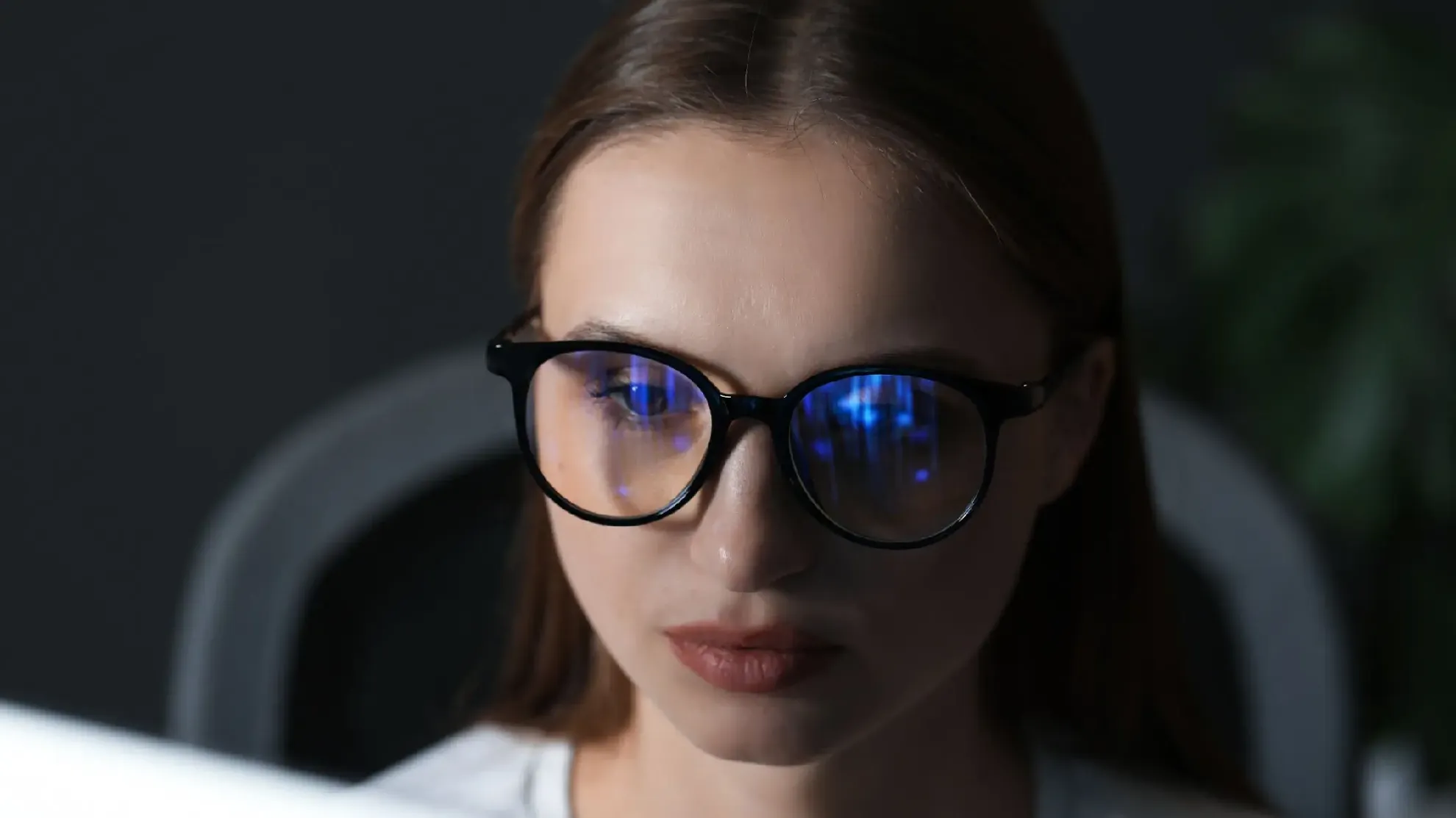
Single Vision Lenses for Driving and Night Vision
Driving requires sharp distance vision. It requires quick reaction times. Use a high-quality single vision lens. Add an AR coating because it maximizes your peripheral awareness. Progressives might require a head tilt. This is to see the side mirrors clearly. Single vision lenses are different and offer a clear view across the entire windshield.

Single Vision Lenses for Industrial Safety eyewear
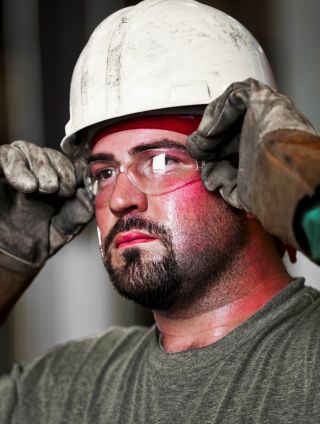
Industrial environments are tough. They require lenses to do more. They must protect their eyes from high-speed particles. Lenses for prescription safety glasses are specific. These must meet ANSI Z87.1 standards. At Eyeweb, we specialize in this. We ensure your safety glasses are optically perfect.

Buying & Fit Guidance: Ensuring Success
Buying single vision eyeglasses online is convenient. It is cost-effective, but accuracy is paramount.
Does PD Matter for Single Vision Lenses?
Absolutely. PD stands for Pupillary Distance. It is the distance between your pupils. Even in a single vision lens, alignment matters. The optical center must align with your pupil. If not, your eyes work harder. They struggle to "fuse" the images, which can lead to double vision. It leads to headaches with significant discomfort. Never guess your PD. Use a professional measurement.
How Frame Choice Impacts Performance
The frame affects the lens. It affects how it sits on your face.
- Large Frames: These offer a wide view. However, they make lenses thicker. This happens at the edges for nearsighted users.
- Wrap-around Frames: These are for safety and sports that require special work. They need "digital surfacing" to prevent distortion at the edges.
- Prescription Accuracy: Keep your prescription up to date. It should be within 1-2 years. A minor change can matter. A change in your "cylinder" is huge. It affects your single vision lenses for astigmatism.
Common Mistakes to Avoid When Buying Single Vision Lenses
- Neglecting Coatings: People skip the AR coating to save money.
- Material Mismatch: Do not choose standard plastic for high-intensity work. That is a safety risk.
- Incorrect Measurements: Accuracy is the difference. It is the difference between glasses you love and glasses you hide. Accuracy matters for your PD.
Eyeweb Advantage: Your Expert in Safety and Vision
Single vision lenses are far from "basic." They are a customizable tool that can be designed for any lifestyle. You might want ultra-thin high index 1.67 lenses. These are for fashion-forward users. You might want rugged polycarbonate lenses. These are for the factory floor and are even a solution for everyone.
We deliver precision-crafted single vision eyewear that meets the highest standards. We understand your vision as it is your most valuable sense. Our mission is to provide the protection and clarity you deserve. Choose the right lenses, material, and appropriate coatings. Ensure an accurate fit. Eyeweb is your trusted partner in vision.