












Last updated: Tuesday, November 10, 2026
Have you ever experienced foggy glasses when stepping outside on a cold day, exercising, or wearing a face mask? Foggy glasses can be frustrating, especially when the temperature changes, you exercise, or you wear a face mask. Blurred lenses can disrupt your daily routine and make it hard to see clearly. Luckily, an anti-fog coating for glasses is a practical solution that reduces fog and keeps your vision clear. You can make better eyewear choices whether you wear everyday eyewear, prescription lenses, or safety glasses.
What Is Anti-Fog Coating for Glasses?
Anti-fog coating is a specific treatment on eyeglass lenses to protect against fogging. It prevents the accumulation of small water droplets on the lens surface that may block the line of sight. Anti-fog lens coating can be very beneficial to those who experience fogging frequently in humid environments or sudden temperature changes.
This treatment works for all kinds of eyewear, including standard glasses, sunglasses, and some protective eyewear. Anti-fog coating for eyeglasses will make activities more comfortable because you don't have to constantly wipe your lenses.
How Does Anti-Fog Coating Work?
Fog can form when warm, moist air meets a cold lens surface and forms small water droplets. Anti-fog treatments will make moisture more uniformly distributed across the lens instead of manifesting as droplets.
This enhances vision clarity in difficult situations. Anti-fog coating for glasses with masks helps reduce fogging caused by warm breath escaping around the edges of a face covering.
Key Benefits of Anti-Fog Coating
Anti-fog coatings provide several benefits to those who use eyewear daily:
- Better visibility: Reduces fogging in humid and changing temperatures.
- Everyday comfort: Glasses are easier to wear when commuting, exercising, and outdoors.
- Cleaning: Less cleaning required because of reduced wiping frequency.
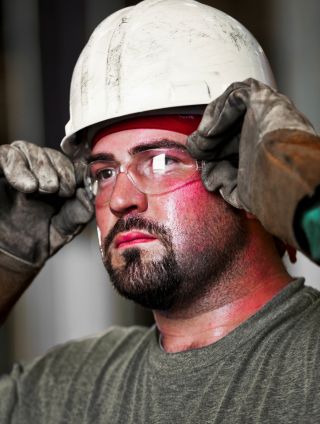
- Increased safety: Anti fog coating for safety glasses is used to ensure workers can see better when condensation is present.
- Improved mask fit: Reduces fogging while wearing a mask.
If you wear glasses all day long, these advantages can really help you.
How Long Does Anti-Fog Coating Last?
The duration of an anti-fog treatment is determined by its quality, application, and maintenance. Some coatings are designed for longer-term use, while others require regular activation or special care.
Permanent anti-fog coatings for glasses are typically referred to as “durable” treatments, but they should not be taken to mean permanent. It's important to pay attention to the manufacturer's cleaning and maintenance guidelines to help maintain its performance.
Is Anti-Fog Coating Worth It?
Anti-fog coating may be a good option for those whose lenses often get foggy. It can be especially helpful for people who wear glasses during physical activity, work, travel, or when wearing a mask.
When condensation is a frequent issue, anti fog coating for prescription glasses can enhance daily convenience without altering your prescription. But this depends on your way of life and how frequently your lenses fog up.
Anti-Fog Coating vs. Spray: Which Is Better?
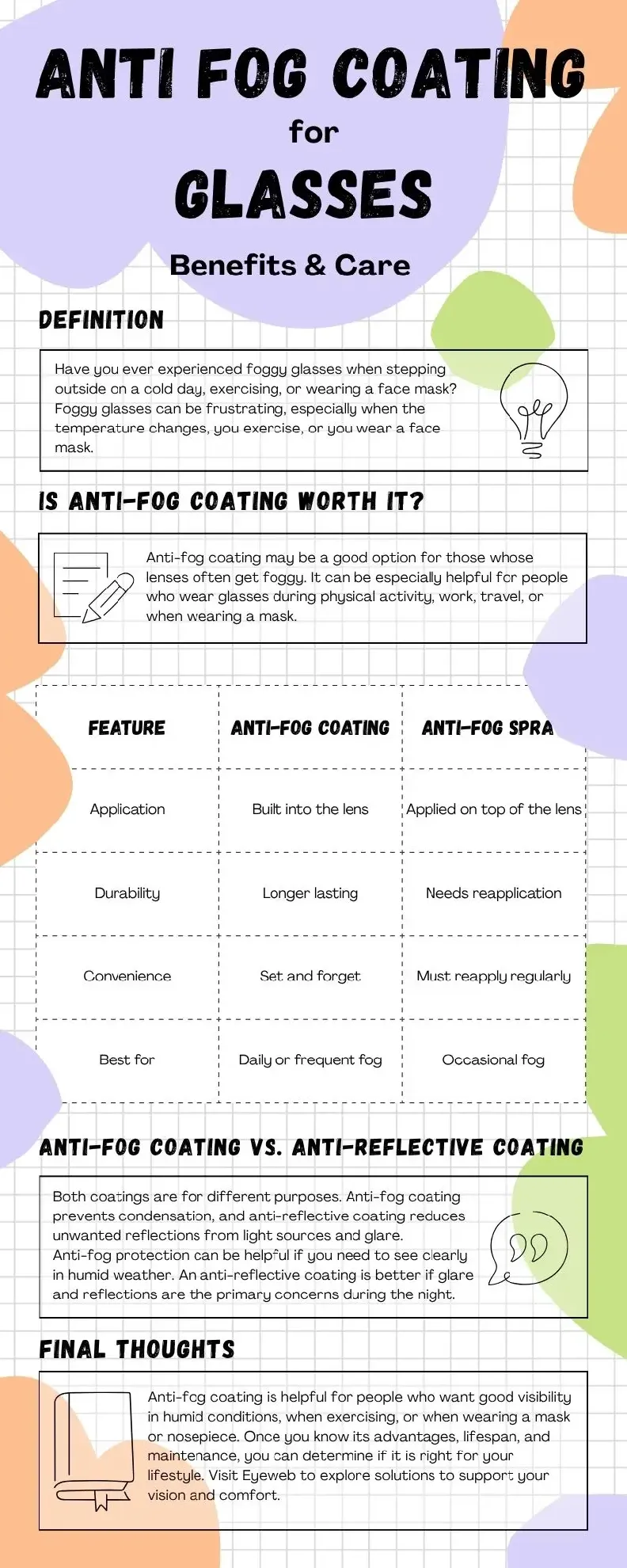
Anti-fog coatings and sprays can both help to minimize lens fogging, but they are different types of products. The lens is coated with a material to improve its performance and can last longer, depending on the product. Anti-fog sprays, however, are short-term and usually need to be reapplied.
Feature | Anti Fog Coating | Anti-fog Spray |
Application | Built into the lens | Applied on top of the lens |
Durability | Longer lasting | Needs reapplication |
Convenience | Set and forget | Must reapply regularly |
Best for | Daily or frequent fog | Occasional fog |
Sprays are easy to use with existing glasses, but they should always be checked before application on coated lenses.
Anti-Fog Coating vs. Anti-Reflective Coating
Both coatings are for different purposes. Anti-fog coating prevents condensation, and anti-reflective coating reduces unwanted reflections from light sources and glare.
Anti-fog protection can be helpful if you need to see clearly in humid weather. An anti-reflective coating is better if glare and reflections are the primary concerns during the night. Both can solve various eyewear needs.
How to Clean Anti-Fog Lenses Properly
Cleaning your lenses properly is key to keeping them in good condition. Follow these simple care tips:
- Wipe your lenses with a clean microfiber cloth.
- Clean according to the manufacturer's recommendations.
- Don't use paper towels, rough fabrics, or abrasive materials.
- Avoid harsh chemicals or household cleaners.
- Use only approved lens cleaners for your specific coating.
Can Anti-Fog Coating Be Added to Existing Glasses?
Sometimes, the anti-fog coating can be added to your current pair of glasses. But compatibility depends on the coating material and existing coatings. Consult an eyewear professional first to see if your lenses are appropriate for the additional treatment before buying.
Final Thoughts
Anti-fog coating is helpful for people who want good visibility in humid conditions, when exercising, or when wearing a mask or nosepiece. Once you know its advantages, lifespan, and maintenance, you can determine if it is right for your lifestyle. Visit Eyeweb to explore solutions to support your vision and comfort.