















Last updated: Monday, September 28, 2026
Bright sunshine makes outdoor activities enjoyable, but too much glare ruins the experience. When light bounces off wet roadways, water surfaces, or automobile hoods, it can cause blinding reflections. You will squint due to this extreme brightness, which can cause headaches and visual fatigue.
Standard dark tints just reduce overall light level, but they don't remove reflected glare. A pair of eyeglasses with accurate lenses corrects this problem entirely. The right specialized optics change the way you see the world outdoors.
Whether you're driving, fishing, hiking, or spending a day outside, the right sunglasses can make bright conditions much more comfortable. Based on your profession, lifestyle, and vision needs, Eyeweb can present you with a variety of lens and frame choices for prescription and protective lenses.
What Are Polarized Lenses?
To understand what are polarized lenses, you need to understand the behavior of light outdoors. The sun's rays go in all directions. Sunlight reflects off water, snow, or pavement in a horizontal wave direction. This intense horizontal light gives high levels of glare, making it hard to see.
The term " polarized lenses meaning refers to specialized sun lenses treated with a microscopic chemical filter. Polarized lenses describe an optical filter laminated vertically within the lens material. A polarizing filter is oriented to reduce horizontally polarized reflected light while allowing more vertically oriented light to pass through.
Knowing about polarized lenses helps you select better protective gear. Polarized glasses are designed to reduce distracting reflections, which can make bright outdoor conditions easier on your eyes. Standard sunglasses simply darken your view, which forces your pupils to dilate behind dark plastic.
On the other hand, sunglasses with polarized lenses block out strong reflections immediately. Polarized sunglasses quickly improve color contrast, as they offer more than just glare protection. Even with intense direct sunshine, you may see things more clearly and easily.
How Do Polarized Lenses Work?
Consider the reflection of sunlight on a flat surface to see how polarized lenses function. The majority of that light then reflects horizontally. This creates the bright glare seen on water, asphalt, snow, and dashboards. A set of tiny blinds is comparable to a polarizing filter. It removes much of the horizontal glare while letting in some light.
So, polarized lenses reduce visual noise from reflected light. The result may include better contrast, less squinting, and more comfortable outdoor vision. Polarization is different from tint. Tint changes how much light enters the eye. Polarization targets a particular direction of reflected light.
How to Identify Polarization
You can often tell if lenses are polarized by using an LCD screen. Hold the glasses in front of the screen and rotate them. The display may become darker at certain angles. This test is not universal, so product labelling remains more reliable. Look for terms such as “polarized,” “polarization,” or “polarized filter” in the product specifications.
Types of Polarized Lenses
Common types include:
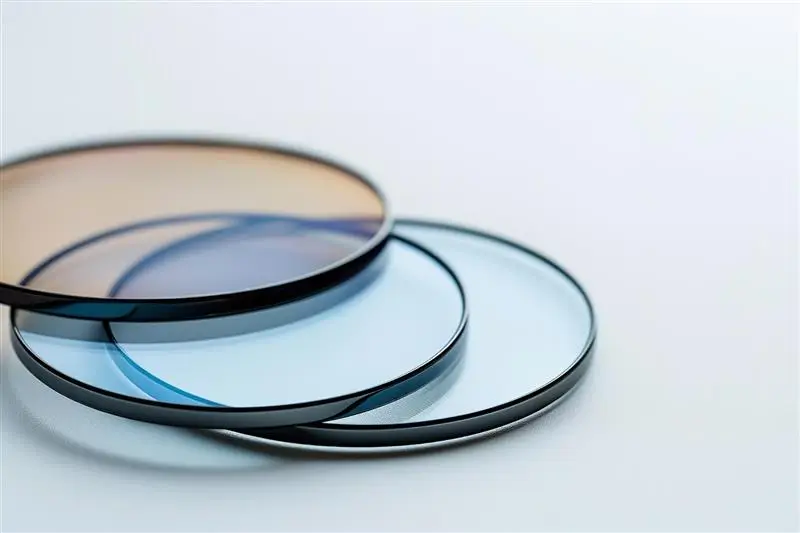
- Gray polarized lenses for balanced color and bright sunlight.
- Brown polarized lenses for contrast and variable outdoor light.
- Green polarized lenses for natural color balance.
- Yellow polarized lenses for low-light contrast.
- Clear polarized lenses for specialized glare control where dark tint is not desirable.
Clear polarized lenses are less common than tinted versions. They are useful for certain optical applications, but they are not to be confused with clear lenses without polarization.
Benefits of Polarized Lenses
The main benefit of polarized lenses is that they reduce glare. In settings with intense reflections, they are particularly useful.
Better Comfort Outdoors
Polarized lenses can help minimize eye strain and squinting because of glare. They can make long trips, boat trips, and outdoor work more comfortable. They can also enhance the user's ability to view surface details more effectively. Polarized lenses can reduce surface glare, which may make it easier for anglers to see into the water under suitable conditions. Roads and surrounding vehicles may be less reflective for drivers.
Enhanced Contrast and Visual Clarity
Colors and edges may look clearer when reflected glare is minimized. This is not to say that polarized glasses are better or used as a replacement for a prescription. They just filter out some of the reflected light. Is it worth it to get polarized lenses?
They are common for those who work near water, snow, roads, or bright reflective material. The benefit may be minimal on cloudy days or when indoors. Polarized lenses are better for glare reduction. They are not automatically better for every task.
UV and Blue-Light Questions
Are polarized lenses UV blocking?
Not necessarily, because both are distinct functions. Polarized lenses should also include UV protection.
Are there polarized lenses that block blue light?
Standard polarization doesn't aim for blue light. Certain special lenses are equipped with an additional blue-violet filtering component. For instance, Transitions XTRActive Polarized lenses incorporate both photochromic and polarization technology plus specified blue-violet filtering.
Always read the product specifications. Never assume polarization provides every type of light protection. Eyeweb's certified polarized lenses provide high-impact resistance and full UV and glare protection for complete vision protection.
Polarized vs. Non-Polarized Lenses
The main difference between the two is the "glare filter". Through tint, non-polarized lenses lessen brightness. Horizontally reflected light is not selectively blocked by them. To reduce this glare, polarized lenses use a unique directional filter.
Visual Performance and Contrast
Performance is where the polarized and non-polarized alternatives differ, particularly in areas with water or snow. By removing distracting horizontal reflections, polarized glasses allow you to clearly discern color contrast and depth. Your eyes can function more easily in intense sunshine with non-polarized lenses, which maintain horizontal glare.
Choosing Between Polarized vs Non-Polarized
Understanding the difference between polarized and non-polarized lenses is essential to choose the optimal solution for the task. When viewing LCD screens, digital instrument panels, or aviation displays, wear non-polarized glasses.
At certain angles, polarized filters can create a rainbow effect or make digital screens look dull. Polarized lenses are better for everyday sun protection, fishing, boating, and driving. They help reduce glare from wet roadways and vehicle hoods, making highway driving safer.
Feature Comparison | Polarized Lenses | Non-Polarized Lenses |
Glare Reduction | Eliminates 99% of horizontal glare | Reduces ambient brightness only |
Visual Contrast | High contrast and rich color depth | Standard color perception |
Water & Snow Vision | Cuts through surface reflections | Heavy reflections obscure details |
LCD Screen Clarity | May show dark lines or patterns | Clear view of digital displays |
Eye Fatigue Relief | Prevents squinting and strain | Moderate strain relief outdoors |
Polarized vs. Transition and Photochromic Lenses
Polarized lenses and photochromic lenses solve different problems. Polarized lenses use a fixed glare filter. Photochromic lenses change tint in response to light, usually becoming darker outdoors and clearer indoors.
Understanding Light-Reactive Optics
Comparing polarized vs transition lenses involves looking at two distinct optical technologies. Standard transition or photochromic lenses react to invisible UV radiation. They stay clear indoors and darken automatically when you step into bright sunlight.
When comparing polarized vs photochromic lenses, standard photochromic lenses do not filter horizontal glare. They simply darken like regular sunglasses. Many buyers wonder: Are transition lenses polarized, or are transition lenses polarized by default? Traditional photochromic optics are not polarized in their standard activated state.
Advanced Dynamic Polarization
Are photochromic lenses polarized in every model?
Standard models are not, but modern optical engineering has created hybrid solutions.
Can transition lenses be polarized?
Yes, specialized optical manufacturing allows variable polarization technology within light-reactive lenses.
Can you get polarized transition lenses for daily wear?
Absolutely. Depending on the specific product, these lenses can remain relatively clear indoors and become darker outdoors. When exposed to outdoor sunlight, they darken and activate real-time polarization.
A leading example is Transitions XTRActive polarized lenses. These advanced XTRActive polarized lenses darken inside vehicles and reach dynamic polarization levels outdoors, cutting highway glare effortlessly.
Feature | Polarized | Photochromic |
Main function | Reduces reflected glare | Adjusts tint automatically |
Tint | Usually fixed | Changes with light |
Best use | Water, roads, snow | Moving between indoors and outdoors |
Car performance | Depends on windshield | Standard versions may remain lighter |
Glare reduction | Strong when properly designed | Limited unless also polarized |
Polarized Prescription Lenses
Polarized prescription lenses combine vision correction with glare reduction. They are available for prescription sunglasses and selected everyday eyewear designs.
Polarized sunglasses prescription lenses can support:
- Single-vision prescriptions.
- Bifocal prescriptions.
- Progressive prescriptions.
- Sport prescriptions.
- High-index, polycarbonate, or Trivex materials.
Polarized sunglasses with RX lenses are helpful for drivers, boaters, cyclists, outdoor workers, and individuals who require prescription correction during the day.
Choosing the Lens Material
Polarized lenses made of polycarbonate are strong and light. They are great options for industrial jobs, vigorous sports, and safety glasses.
Glass lenses are known for excellent optical clarity and scratch resistance, although they are heavier than many plastic alternatives.
RX sports sunglasses should also fit securely. Check for wrap coverage, retention, ventilation, and helmet compatibility.
Polarized contact lenses aren't a standard choice. Contact wearers typically wear polarized prescription or non-prescription sunglasses over their contacts.
For workplace use, verify that the complete prescription configuration meets the required safety standard. Eyeweb offers prescription eyewear options that can be selected based on lens needs, fit, and work environment.
Polarized Lens Colors
Lens colours change the world's perception. They also impact contrast, depth perception, and comfort.
Selecting Tint Colors for Specific Environments
Lens color does more than complement your frame style. Specific tints filter light differently, enhancing contrast for distinct outdoor settings.
- Polarized grey lenses provide true color perception. They reduce overall light intensity but do not change the color values of the light. These lenses are ideal for all-day driving and general use.
- Polarized brown lenses increase contrast and depth perception. They can block blue light very efficiently, well suited for golf, hiking, and changing light.
- Green polarized lenses deliver high visual contrast while keeping color balance natural. They are excellent in outdoor sports and lessen eye strain under intense sunlight.
- Polarized sunglasses with yellow lenses can enhance vision in dimly lit, cloudy, or foggy environments. They brighten the surroundings and lessen surface diffuse reflections.
Specialized Gradient and Mirror Tints
Polarized gradient graphite lenses feature a smooth dark-to-light transition from top to bottom. Understanding the meaning of polarized gradient graphite lenses comes down to multi-functional utility.
A gradient lens is darker at the top and lighter at the bottom. It can be useful when driving because it reduces overhead sunlight while keeping the dashboard easier to see.
Black iridium polarized lenses have a high-grade mirror coating on a dark base tint. This mix repels light and absorbs horizontal glare, which is ideal for bright, glaring conditions such as open water or snow.
Lens Tint Color | Lighting Conditions | Primary Visual Benefit | Recommended Activity |
Grey / Gray | Bright, direct sunlight | True color accuracy & glare control | Daily driving, general outdoor wear |
Brown / Bronze | Variable, overcast to sunny | High contrast & depth perception | Golfing, hiking, trail running |
Green | Bright to medium light | Low visual fatigue & high contrast | Precision field sports, tennis |
Yellow | Foggy, hazy, low light | Maximizes ambient light & clarity | Target shooting, dawn/dusk sports |
Gradient Graphite | Bright overhead sun | Clear view of lower dashboards | Driving, urban commuting |
Polarized Lenses for Sports and Outdoor Activities
Fishing polarized lenses are popular because they reduce the glare that reflects off the water surface. This can help to identify structure, movement, and depth changes more easily.
Fishing and Water Activities
Polarized lenses for fishing are one of the most helpful applications for anglers. Water reflects a lot of glare, making it hard to see through the water.
The best color polarized lenses for fishing depend on weather, water conditions, and personal preference. Grey is suitable for sunny conditions. Brown or amber colors can be helpful in different situations.
Polarization does not allow you to see through water like a special camera filter. Rather, it is more convenient to view objects under the water if the surface glare can be reduced where possible.
Baseball and Active Sports
Polarized lenses for baseball can be beneficial in sunny outdoor environments, but are not suitable for all players or playing conditions. Baseball players must keep track of a moving ball, and lens color, contrast, and lighting of the field are important.
RX sports sunglasses with polarized lenses help lessen glare and correct vision if prescription correction is required. Comfort and a secure fit are as important as lens technology in any sport. A great lens is less useful if the frame slips during movement.
Glass vs. Polycarbonate Polarized Lenses
Material affects clarity, weight, durability, and cost.
Material Comparison and Clarity
The selection of materials for your sunglasses depends on your everyday requirements. Polarized sunglasses with glass lenses provide the clearest optical clarity of all sunglasses.
However, polarized sunglasses with glass lenses are heavier on the nose and can shatter upon direct high-force impact. This makes glass less suitable for high-impact sports or industrial job sites.
Impact Protection and Weight Factors
Polycarbonate lenses are lightweight and offer excellent impact resistance, making them a popular choice for sports, safety eyewear, and active lifestyles.
Glass is less likely to scratch than polycarbonate, but this can be mitigated with integrated anti-scratch coatings. For safety, lightweight, and glare prevention, polycarbonate is perfect for construction, sports, and daily active use.
Are Oakley Prizm Lenses Polarized?
Prizm and Polarization Are Different Technologies. One frequently asked question is: Are Oakley Prizm lenses polarized? Some are polarized, but not all.
Do Prizm lenses have polarization? Not necessarily. Prizm is the technology Oakley uses on its lenses to promote color and contrast in various environments. Polarization is a separate technology that reduces reflected glare.
Oakley's current lens offering includes both Prizm and Prizm Polarized. For instance, it offers different replacement lens options for Prizm and Prizm Polarized in a variety of colors. Thus, not all Oakley Prizm lenses are polarized.
Prizm vs. Prizm Polarized
The simplest way to understand Prizm lenses vs. polarized is to look at their primary functions.
Prizm is designed to enhance color and contrast. Polarization is designed to reduce reflected glare. A lens can have one technology, the other, or both.
Prizm polarized lenses combine these technologies. They can be useful in bright outdoor environments with low glare and high contrast.
Before making a purchase, please confirm the product name. Make sure to look at the lens technology in the product description when looking for eyewear options on Eyeweb, not simply the brand name or color.
Final Words
Polarized lenses filter out glare in a particular direction. They can enhance comfort and contrast when driving, fishing, snow sports, outdoor work, and bright recreational activities. They are not always coated with UV or blue-light protection. Such features should be verified individually.
Photochromic lenses change tint. Polarized lenses block out glare. Select based on your real environment. Consider lens color, impact protection, materials, frame fit, prescription requirements, and visibility. Eyeweb provides a selection of workplace and prescription eyeglasses that combine comfort, safety, and clarity.