












Last updated: Tuesday, November 10, 2026
Ultraviolet (UV) rays are a common part of everyday sunlight exposure, even on cloudy days. Even though they are not visible, they can have an impact on eye health over time. Selecting the appropriate eyewear is a crucial component of everyday eye care. UV coating for glasses offers protection from harmful UV rays without compromising the clarity of your vision. If you wear prescription glasses or non-prescription eyewear, knowing about UV protection can help you make an informed choice.
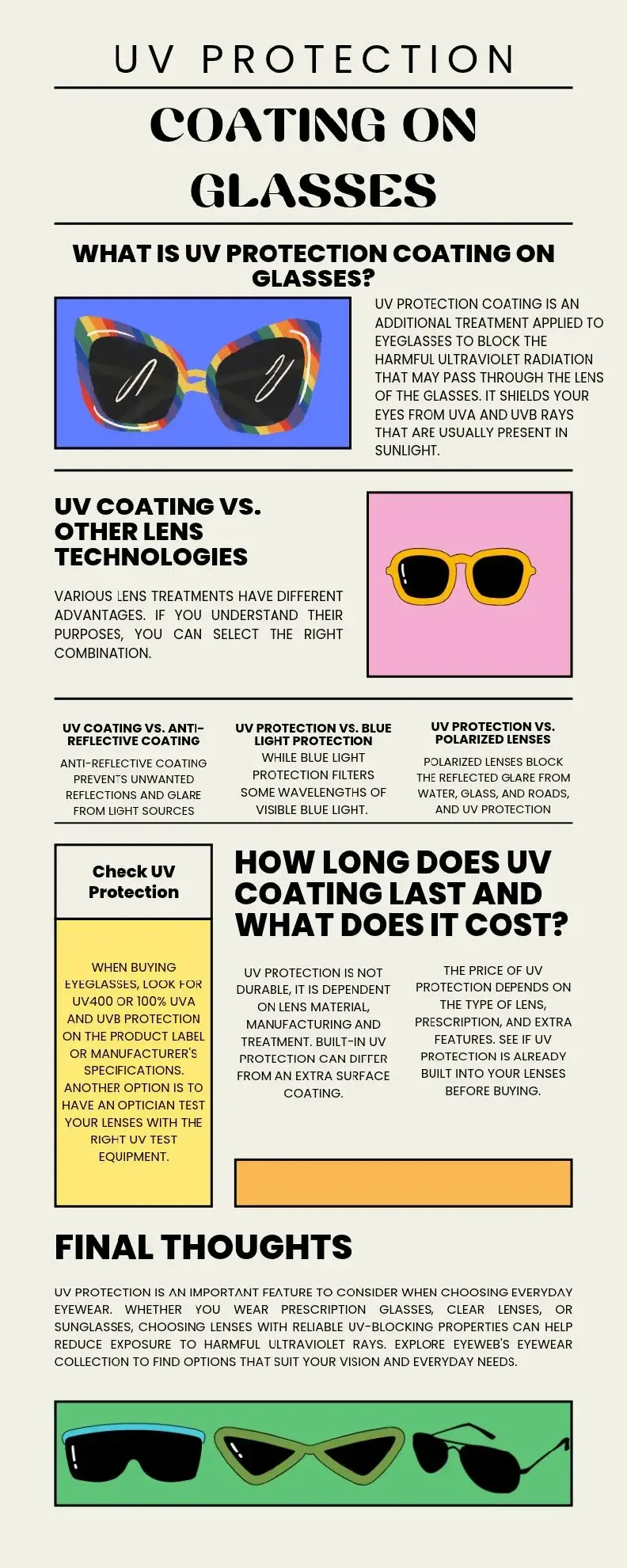
What Is UV Protection Coating on Glasses?
UV protection coating is an additional treatment applied to eyeglasses to block the harmful ultraviolet radiation that may pass through the lens of the glasses. It shields your eyes from UVA and UVB rays that are usually present in sunlight.
Some lenses may have a UV-protective lens coating, and some contemporary lens materials come with UV protection. This technology can be used in various kinds of glasses, such as prescription glasses, sunglasses, and standard glasses.
How Does UV Coating on Glasses Work?
UV coatings are designed to absorb or block UV rays from your eyes. Depending on the lens material and technology, protection can be built into the lens or applied to the lens.
UV-protective lenses need not be dark to offer protection, unlike tinted lenses. Therefore, UV coating for eyeglasses can help reduce UV exposure while maintaining the natural appearance of clear lenses.
Key Benefits of UV Protection Coating on Glasses
There are several benefits to adding UV protection to your eyeglasses:
- Minimizes UV exposure from the sun.
- Protects eyes during outdoor activities, commuting, and chores.
- Offers extra protection for individuals who are relying on the proper use of corrective lenses.
- You don't need to wear dark or tinted lenses to get UV protection.
- Gives you protection as a regular part of your everyday eyewear.
If you wear glasses for a lot of time outdoors, then UV protection is a pleasant feature to look for.
Is UV Coating on Glasses Worth It?
UV protection can be a handy addition if you spend a lot of time outdoors. It decreases UVA and UVB exposure without changing your prescription or needing tinted lenses.
For those who use corrective lenses, UV protection for prescription glasses is especially beneficial. They can wear sunglasses for the day, or prescription lenses with UV-blocking properties as well.
But there are some contemporary lenses that offer built-in UV protection, so read the specifications before purchasing an extra coating.
UV Coating vs. Other Lens Technologies
Various lens treatments have different advantages. If you understand their purposes, you can select the right combination.
UV Coating vs. Anti-Reflective Coating
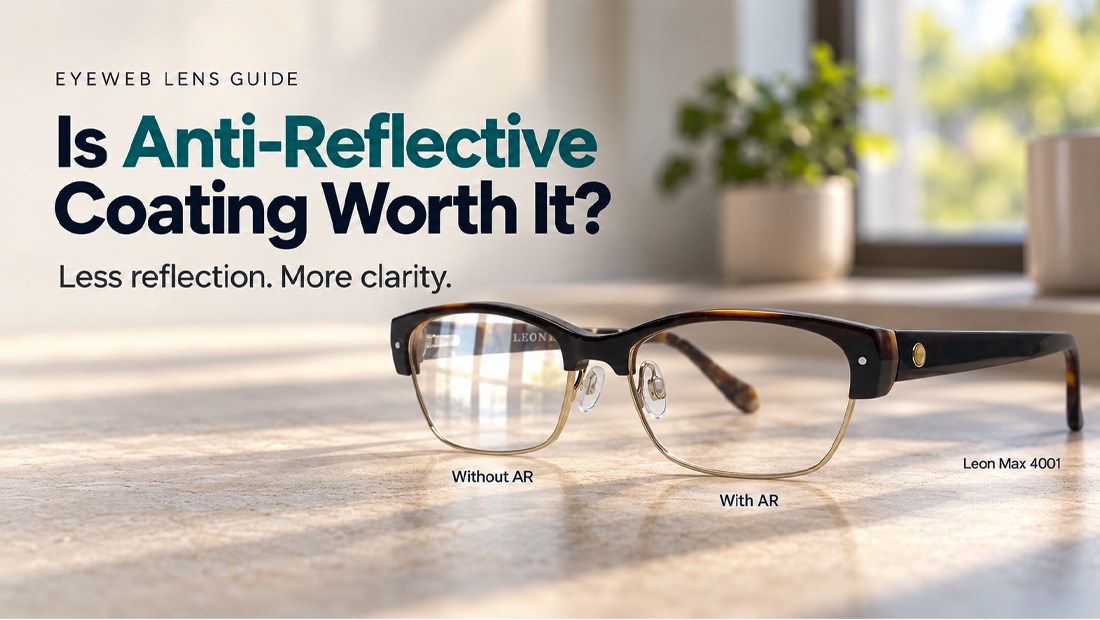
Anti-reflective coating prevents unwanted reflections and glare from light sources, while UV coating protects from UV rays. They both have their own applications and can be helpful in combination.
UV Protection vs. Blue Light Protection
UV protection filters ultraviolet rays from sunlight, while blue light protection filters some wavelengths of visible blue light. The various technologies address various forms of light exposure.
UV Protection vs. Polarized Lenses
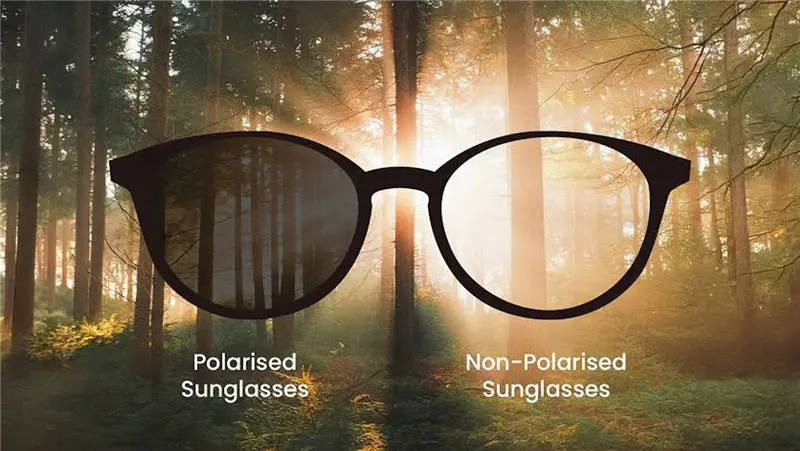
Polarized lenses block the reflected glare from water, glass, and roads, and UV protection absorbs harmful UV rays. Some polarized sunglasses also offer UV400 protection.
How to Check UV Protection on Glasses
When buying eyeglasses, look for UV400 or 100% UVA and UVB protection on the product label or manufacturer's specifications. Another option is to have an optician test your lenses with the right UV test equipment.
Keep in mind that dark or tinted lenses are not always UV protection. There is also UV protection for clear glasses, since clear lenses can block the UV rays without altering their look.
How Long Does UV Coating Last and What Does It Cost?
UV protection is not durable, it is dependent on lens material, manufacturing and treatment. Built-in UV protection can differ from an extra surface coating.
The price of UV protection depends on the type of lens, prescription, and extra features. See if UV protection is already built into your lenses before buying.
Frequently Asked Questions
Do Prescription Glasses Block UV Rays?
Some prescription lenses naturally block UV rays, and some need extra UV protection. Always check the lens specifications before buying.
What Is UV400 Protection on Glasses?
UV400 means it blocks ultraviolet rays up to 400 nanometers.
Do Clear Glasses Provide UV Protection?
Clear lenses can provide UV protection without tinting. However, protection level varies with the lens material and specifications.
Can UV Protection Be Added to Existing Glasses?
For some lenses, there may be more UV treatment options. Compatibility is determined by the material of the lens and available coatings, so check with an eyewear professional before purchasing.
Do Polycarbonate Lenses Need UV Coating?
Standard polycarbonate lenses offer high levels of UV protection. They may not require an additional UV coating, but it's a good idea to check the manufacturer's specifications.
Final Thoughts
UV protection is an important feature to consider when choosing everyday eyewear. Whether you wear prescription glasses, clear lenses, or sunglasses, choosing lenses with reliable UV-blocking properties can help reduce exposure to harmful ultraviolet rays. Explore Eyeweb's eyewear collection to find options that suit your vision and everyday needs.