



















Last updated: Friday, March 20, 2026
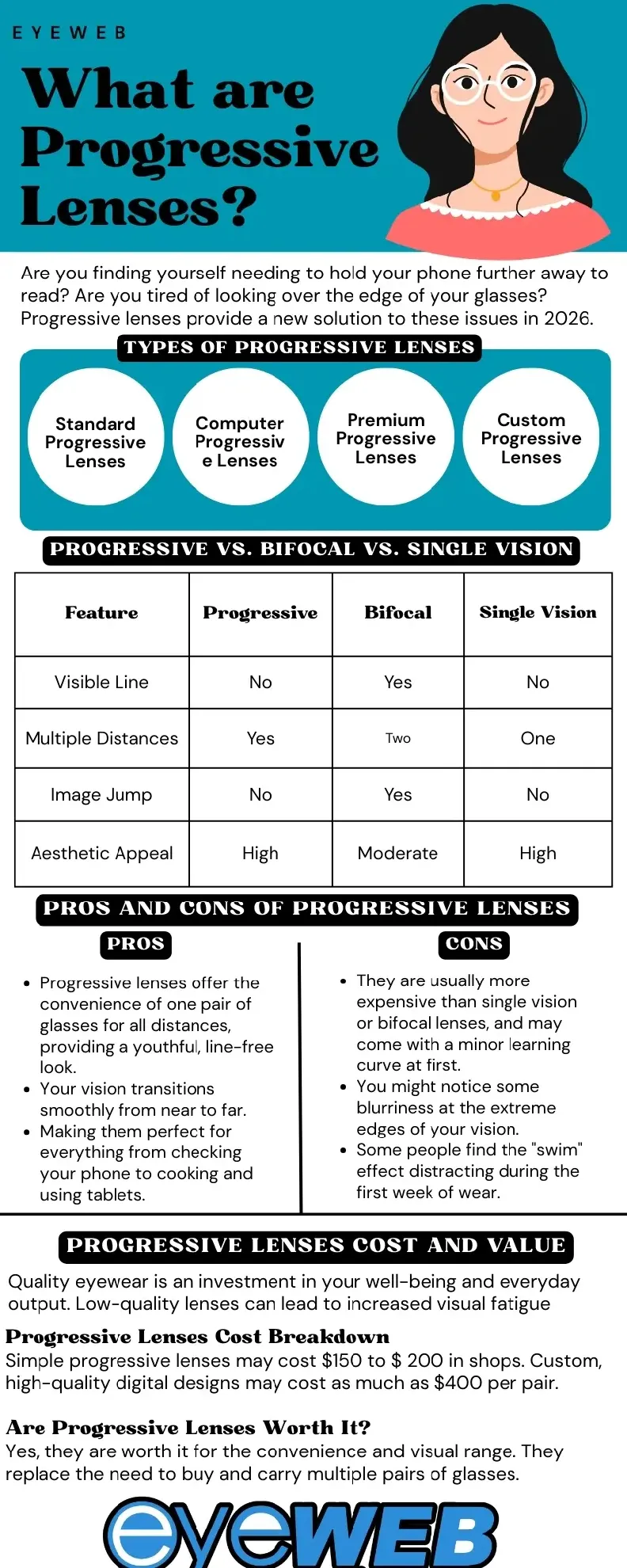
Are you finding yourself needing to hold your phone further away to read? Are you tired of looking over the edge of your glasses? Progressive lenses provide a new solution to these issues in 2026. These advanced multifocal lenses offer a natural means of seeing at every distance. The lenses are what truly correct your eyesight when you put the frames on your face. So choose the right lens and its material, coatings, and tints according to your needs.
This guide explains their functionality and why they are an excellent option. Progressive lenses glasses are now the standard for active, modern people. They are free of lines, which allows them to focus smoothly across various points of focus.
What Are Progressive Lenses in Glasses?
Progressive lenses are a type of multifocal lens to treat presbyopia. Presbyopia is the natural loss of close-focusing that occurs as a person ages. Compared to bifocals, these lenses show no lines on their surfaces. They provide a seamless transition of power from the top to the bottom.
You can see far away, intermediate, and close-up with one pair. This makes them a very popular choice for active adults today. These lenses mimic natural vision better than any other optical design. They eliminate the need for carrying multiple pairs of glasses for tasks.

The best glasses with progressive lenses use digital free-form technology for the sharpest vision. Varilux is the top brand, dominating the market with large, comfortable viewing areas. The most appropriate lens will be based on your daily work tasks and hobbies.
When you use a good lens, you will adapt more quickly and get a better view. Premier designs provide broader reading and computer areas. You should always seek lenses that suit your particular occupational eye hazards.
How Do Progressive Lenses Work?
Getting familiar with the design of these lenses assists you in making better use of them. They are complex tools designed to work with your natural eye movements.
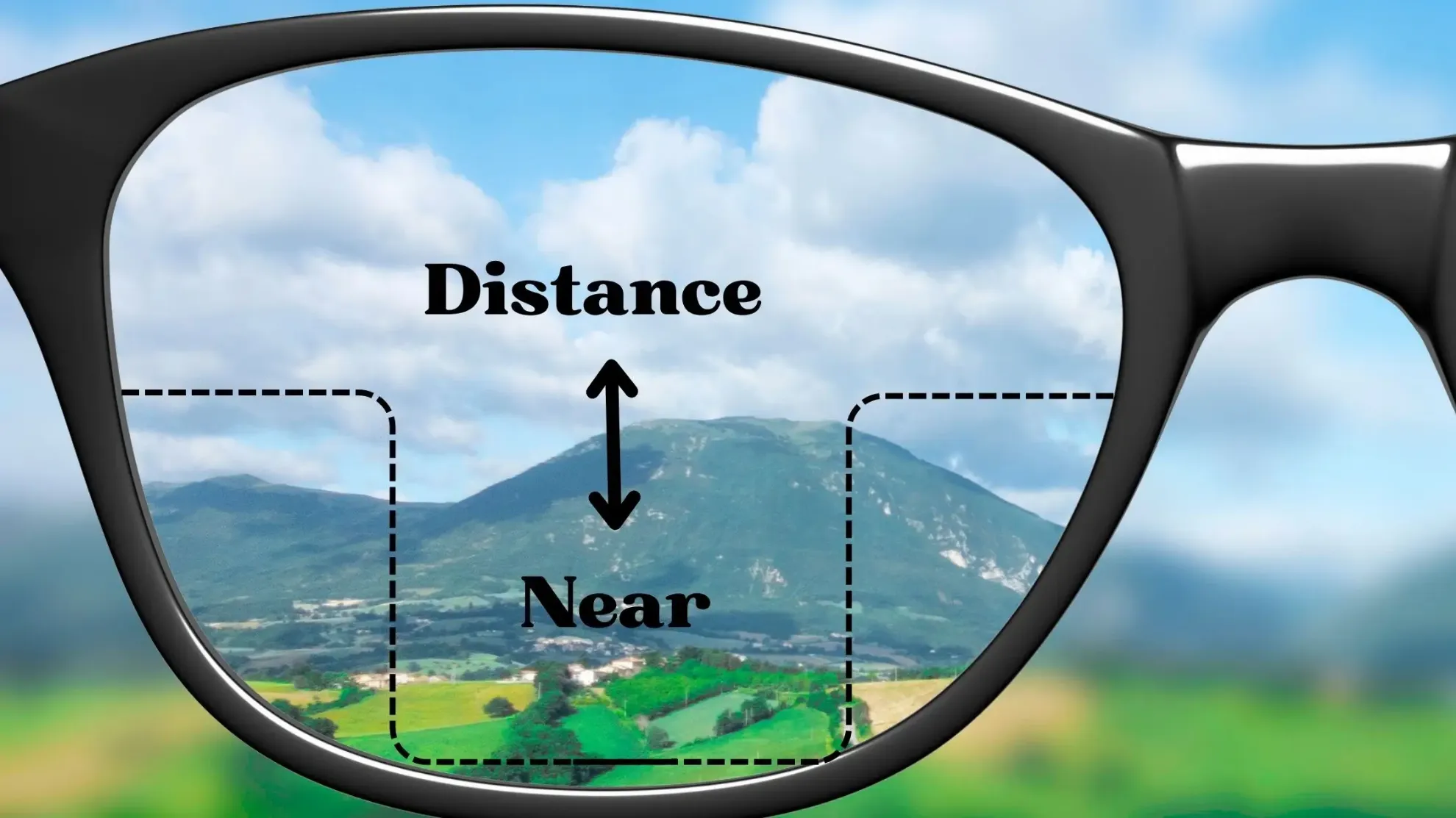
Progressive lenses work by placing three prescriptions into a single lens. Your eyes move naturally to find the magnification needed for each task. You look through the top for driving or watching a movie. You look through the middle for computer work or the dashboard.
Finally, you look through the bottom for reading or texting. This vertical arrangement follows the natural path of your gaze. It provides a continuous range of vision without any abrupt changes.
How Do Progressive Lenses Work Technically?
Technically, the lens surface features a complex and varying mathematical curve. Optical engineers design these curves to bend light at different angles. This allows the lens power to change gradually without any breaks. Modern software ensures these changes are smooth and consistent across the lens. The back surface of the lens is often digitally surfaced for precision. This process creates a personalized viewing experience for every wearer’s eyes.
Progressive Corridor
The progressive corridor is the vertical channel in the middle of the lens. This area connects your distance vision to your near vision area.
- Advanced Digital Surfacing Technology: Labs now use computer-controlled tools to carve each lens. This precision eliminates distortions that were common in older lens designs. It allows for a much wider and clearer intermediate viewing corridor.
- Why No Visible Line Matters: Lines in bifocals cause a jarring effect called "image jump." Progressives eliminate this jump, making your vision feel much more natural. It also keeps your glasses looking stylish with single-vision lenses. Many people prefer this because it does not reveal their age.
Types of Progressive Lenses
Progressives come in a variety of types depending on visual requirements. Having the right one is the key to your comfort and productivity.
Standard Progressive Lenses
These are the basic entry-level options for those on a budget. They provide good vision but have a slightly narrower reading area. They are great for people who only need them for light use. However, they may have more peripheral blur than premium lens options.
Computer Progressive Lenses
Computer Progressive lenses are optimized for intermediate and near vision tasks specifically. They suit individuals who spend hours at the computer. These lenses are designed to alleviate digital eye strain and enhance your office posture. They are often called "office lenses" or "workplace progressives" in shops.

Premium Progressive Lenses
Premium lenses use free-form technology to widen the clear vision zones. They provide a much more stable view with less peripheral distortion. Most users find these much easier to get used to quickly. They are ideal for people with high prescriptions or active jobs.
Custom Progressive Lenses
Custom lenses are built specifically for your unique face and frame. The lab uses your exact measurements to place the corridor perfectly. This results in the most natural vision possible for your eyes. They offer the largest fields of view for all three zones. When buying progressive lenses online, custom measurements are vital for success.
Transition Progressive Lenses
With Transition Progressive Lenses, there is no need to carry a pair of sunglasses. They provide the comfort of having both sunglasses and glasses. This suits workers who travel between indoor and outdoor locations. They shield your eyes against dangerous UV rays during the day.
Varilux Progressive Lenses
The most renowned brand in terms of innovation in multifocal lenses is Varilux. They provide numerous designs to suit all lifestyles. They are known for providing the most effortless transition between focal points. Many patients report the highest satisfaction levels with Varilux brand products.
Progressive vs. Bifocal vs. Single Vision
Selection of the proper lens type is crucial to your safety and comfort. Both designs have various applications in optics.

Progressive Lenses vs. Bifocals
Bifocals can only focus on two distances: distant and very close. They lack the intermediate zone needed for modern computer-based work tasks. Progressives offer a full range of vision for a modern lifestyle. Bifocals also have a visible line that many people dislike. Progressives are much more versatile in looking at a car dashboard.
No-Line Bifocals vs. Progressives
"No-line bifocals" are often confused with progressives, but are quite different. True progressives have an intermediate zone that no-line bifocals simply lack. Progressives are the superior choice for most people with active lives. No-line bifocals are essentially just two prescriptions blended with a blur.
Progressive Lenses vs. Single Vision
Single vision lenses fix only one distance, which could be reading or driving. With presbyopia, you would require two pairs. Progressives remove the inconvenience of changing glasses during your busy schedule. This is a major safety advantage in high-speed working conditions. You never need to leave your reading glasses behind.
Comparison Table
Feature | Progressive | Bifocal | Single Vision |
Visible Line | No | Yes | No |
Multiple Distances | Yes | Two | One |
Image Jump | No | Yes | No |
Aesthetic Appeal | High | Moderate | High |
Adaptation Time | Moderate | Short | Minimal |
Pros and Cons of Progressive Lenses
Every technology comes with advantages and some minor drawbacks. Before buying something, one should weigh it.
Benefits of Progressive Lenses
The biggest benefit is having one pair of glasses for everything. They provide a more youthful look because there are no lines. Your vision transitions smoothly as you look from your phone to the distance. They are excellent for intermediate tasks like cooking or using tablets.
Drawbacks of Progressive Lenses
They are usually more expensive than plain single vision lenses or lined bifocal lenses. You can initially experience a minor learning curve with progressive lenses. At the extreme edges of your vision, you may find some blurriness. Some people find the "swim" effect distracting during the first week.
Common Problems with Progressive Lenses
New wearers experience the sensation of swimming as they move swiftly. Before you know where to look, the stairs might be difficult to locate. The bottom of the lens gives the impression that the ground is blurry. These problems usually go away after you adjust to the lenses.
Progressive Lenses Cost and Value
Quality eyewear is an investment in your well-being and everyday output. Low-quality lenses can lead to increased visual fatigue and headaches.
Progressive Lenses Cost Breakdown
Simple progressive lenses may cost $150 to $ 200 in shops. Custom, high-quality digital designs may cost as much as $400 per pair. Coatings such as anti-glare and scratch resistance will add to the price. High-quality frames from Eyeweb add further value and protection to lenses. Buying progressive lenses online can often save you significant money annually.
Are Progressive Lenses Worth It?
Yes, they are worth it for the convenience and visual range. They replace the need to buy and carry multiple pairs of glasses. Most people find the visual freedom they provide is truly priceless. They improve your overall quality of life at home and work.
Progressive lenses sunglasses are a game-changer for outdoor enthusiasts and drivers. They provide the same three-zone vision while protecting your eyes from glare. You can read a map or dashboard while seeing the road clearly. This makes them much safer than switching to non-prescription shades while driving.
Beginner's Guide to Progressive Lenses
The effectiveness of your new lenses is in your usage. It all depends on patience to learn your new vision. The key to adjusting to progressive lenses is to turn your head, not your eyes. Whatever you want to see clearly, point your nose at it. Wear them every day, all day, to get your brain used to it. During the period of adaptation, avoid returning to your old glasses. With daily use, most individuals get fully used to it in two weeks.
Getting Used to Progressive Lenses with Astigmatism
Digital surfacing allows for very precise correction of astigmatism in progressives. Custom digital lenses are usually the best choice for astigmatism patients. These lenses reduce the distortion often associated with complex optical prescriptions.
Why Trust Eyeweb for Progressive Lenses?
We are leaders in prescription eyeglasses, safety eyewear, and high-quality prescription sunglasses. We offer the best combination of safety, style, and digital clarity. Our team understands the unique needs of every individual. We use the most advanced manufacturing processes for all our optical products.
Eyeweb offers an easy way to order your lenses online today. We offer professional advice to assist you in selecting the ideal design. Our customer support staff is available at all times to address your inquiries. To fit any face, we provide a large selection of frame types.
FAQ Content – Common Questions About Progressive Lenses
Best Glasses for Progressive Lenses?
Eyeweb offers the best glasses for progressive lenses by combining ANSI-rated safety frames with high-definition digital lenses for superior clarity.
What are Progressive Lenses in Glasses?
Progressive lenses in glasses are line-free multifocal lenses that provide a seamless transition between distance, intermediate, and near vision in one pair.
Best Frames for Progressive Lenses?
The best frames for progressive lenses are those with a deep lens height and adjustable nose pads to ensure the perfect alignment of your vision zones.
Cheapest Place to Get Progressive Lenses?
Eyeweb is the most cost-effective choice for progressive lenses by offering laboratory-direct pricing that eliminates retail markups while maintaining premium quality and safety.
How to Tell if Your Progressive Lenses are Correct?
Your progressive lenses would correct if you can achieve sharp focus at all distances by slightly adjusting your head position without experiencing persistent dizziness or headaches.
Do I Need Progressive Lenses?
If you struggle to see clearly at multiple distances or find yourself constantly switching between different pairs of glasses, you need progressive lenses.
Are Progressive Lenses Bifocals?
No, progressive lenses are not bifocals; they are multifocals that provide a seamless gradient of vision without the visible lines and abrupt image jumps of traditional bifocals.